
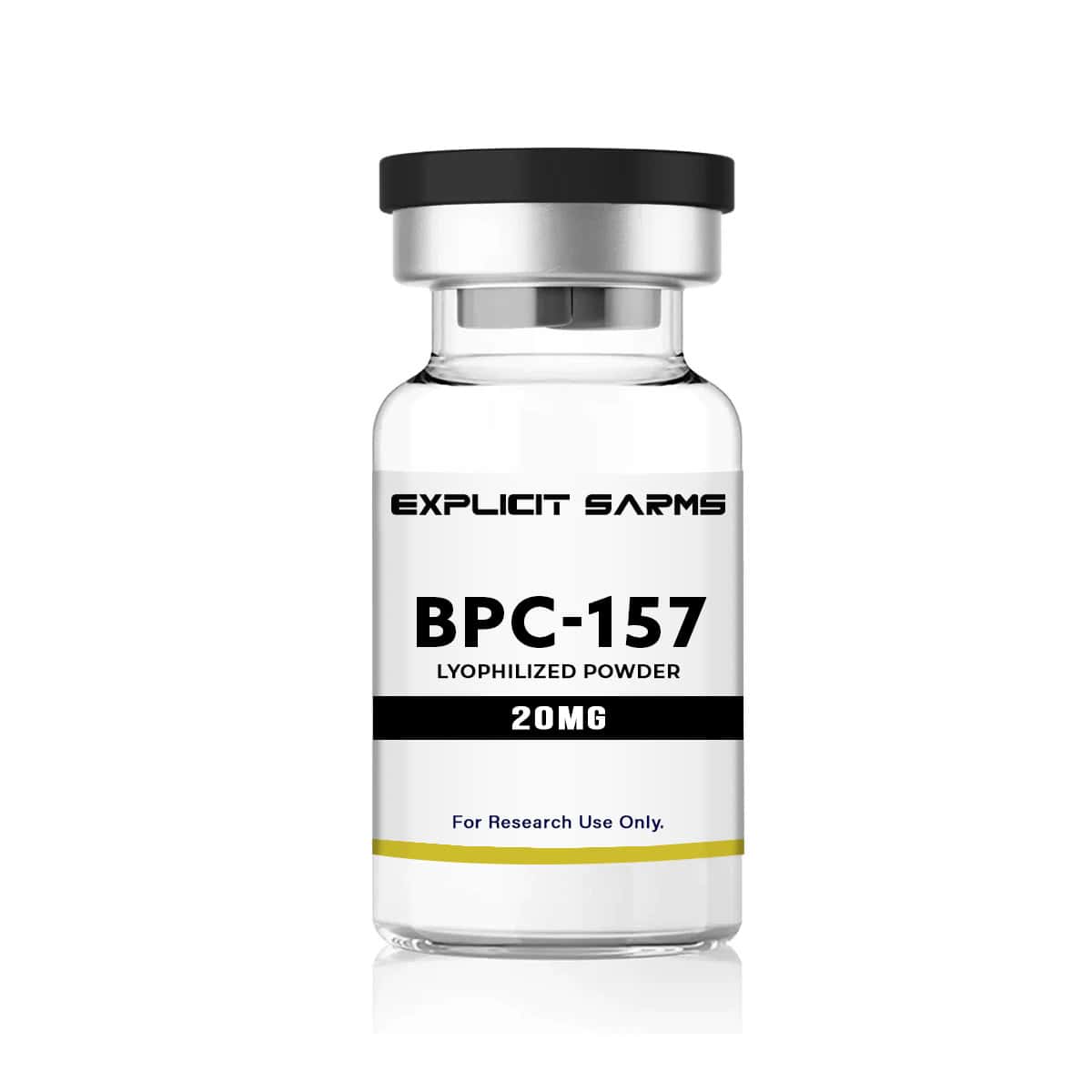
Selective androgen receptor modulators such as rad-140 have generated significant interest in laboratory research, particularly when explored alongside regenerative peptides like BPC-157. At Explicit SARMs, we focus on providing high-quality research chemicals for laboratory and analytical use only. In this guide, we examine the current research landscape surrounding rad-140 and BPC-157, often discussed together in advanced stacking protocols within experimental models.
This article explores what the literature suggests about potential synergy, mechanistic overlap, research planning considerations, and stacking risks strictly from a research perspective.
Understanding RAD-140 (Testolone) in Research
Before evaluating stacking strategies, we need to understand rad-140 on its own. This section covers its mechanism, research applications, and scientific background.
What Is RAD-140?
Rad-140, also known as testolone rad 140, is categorized among rad 140 SARMs. It was originally developed to selectively target androgen receptors in experimental models. Unlike traditional androgenic compounds, rad-140 was designed to exhibit receptor selectivity in tissue-specific environments.
Within laboratory settings, rad 140 is often studied for:
- Androgen receptor binding selectivity
- Anabolic signaling pathways in controlled models
- Neurological receptor interaction hypotheses
- Tissue-specific receptor modulation
When researchers search for rad 140 for sale, they are typically sourcing material intended strictly for laboratory research and analytical evaluation.
Mechanism of Action in Experimental Models
Rad-140 interacts with androgen receptors, triggering gene transcription pathways in target tissues. Research suggests:
- High affinity binding to androgen receptors
- Tissue-selective signaling activation
- Reduced off-target receptor interaction compared to traditional androgenic compounds
These characteristics make rad-140 an interesting compound for receptor-specific research modeling.
Understanding BPC-157 in Research Context
Now that we have covered rad-140, let us examine BPC-157 and its research relevance.
What Is BPC-157?
BPC-157, commonly referred to as the bp157 peptide, is a synthetic pentadecapeptide derived from a protective protein fragment originally studied in gastric tissue models.
In research settings, BPC-157 has been evaluated for:
- Angiogenesis signaling pathways
- Cellular migration patterns
- Tendon and ligament model regeneration
- Nitric oxide system modulation
Laboratories sourcing bpc 157 for sale often acquire it in standardized formats such as BPC-157 5mg for controlled experimental consistency.
Mechanistic Pathways of BPC-157
Preclinical models suggest BPC-157 may influence:
- VEGF-mediated angiogenic signaling
- Fibroblast migration
- Collagen deposition markers
- Nitric oxide modulation
These pathways are relevant when researchers consider stacking peptides with SARMs, particularly in tissue regeneration models.
RAD-140 + BPC-157 Stack: The Research Hypothesis
In this section, we explore why researchers discuss stacking rad-140 with BPC-157 and what theoretical synergy benefits are proposed in experimental literature.
Stacking refers to the combined investigation of two compounds within the same research protocol to examine potential interaction effects.
Proposed Synergy Benefits in Models
Researchers hypothesize synergy in the following areas:
| Research Focus Area | RAD-140 Role | BPC-157 Role | Combined Hypothesis |
| Receptor signaling | Androgen receptor modulation | Indirect signaling support | Enhanced tissue response modeling |
| Connective tissue models | Gene expression activation | Collagen and angiogenic signaling | Integrated structural adaptation research |
| Recovery modeling | Anabolic pathway activation | Vascular support pathways | Coordinated regeneration models |
| Cellular differentiation | Androgen pathway influence | Growth factor modulation | Multi-pathway signaling exploration |
The idea behind the RAD140 + BPC-157 stack is not duplication of mechanism but complementary pathway interaction.
Why Researchers Explore Stacking Peptides with SARMs
Advanced research protocols sometimes combine receptor modulators and peptides to:
- Observe multi-pathway signaling interaction
- Evaluate gene expression cross-talk
- Assess potential compensatory biological mechanisms
- Study combined tissue remodeling responses
This synergy hypothesis remains largely preclinical and experimental.
Evidence and Case Studies in Literature
This section examines available preclinical data. While direct human stacking studies are limited, animal and cellular models provide insight.
RAD-140 Research Overview
Published preclinical studies have examined:
- Lean tissue mass changes in rodent models
- Bone density markers
- Neuroprotective potential in controlled settings
- Receptor selectivity analysis
However, combination research involving rad-140 and peptides remains limited in formal peer-reviewed settings.
BPC-157 Research Overview
BPC-157 studies have demonstrated:
- Accelerated tendon-to-bone healing in rodent models
- Enhanced angiogenesis markers
- Reduced inflammatory pathway expression
- Gastrointestinal protective signaling
Combined Data Observations
Currently:
- There are no large-scale peer-reviewed human trials on stacking rad-140 with BPC-157
- Most stacking discussions are extrapolated from independent compound studies
- Mechanistic overlap suggests possible complementary effects in connective tissue models
Therefore, stacking conclusions remain theoretical rather than clinically established.
Stacking Risks and Research Considerations
Any research protocol involving multiple compounds introduces complexity. In this section, we outline laboratory planning considerations.
Research Variables to Control
When stacking rad-140 and BPC-157, researchers must account for:
- Compound purity and sourcing
- Stability during storage
- Independent pathway monitoring
- Biomarker isolation
- Experimental control groups
Potential Research Risks
Stacking risks in research design may include:
- Confounding signaling interactions
- Misattributed pathway activation
- Overlapping biomarker expression
- Interpretation bias
Careful experimental design is critical to avoid misleading conclusions.
Cycle Plan RAD140 / BPC157 in Research Protocols
The term cycle plan rad140 / bpc157 is often used in research communities to describe structured experimental phases.
In laboratory contexts, this refers to:
- Defined observation windows
- Baseline biomarker assessment
- Sequential or concurrent compound introduction
- Washout periods
Example Research Framework (Illustrative Only)
| Phase | Focus | Research Goal |
| Baseline | No compound exposure | Establish control biomarkers |
| Phase 1 | RAD-140 introduction | Observe receptor pathway activation |
| Phase 2 | Add BPC-157 | Monitor connective tissue markers |
| Post Phase | Withdrawal | Evaluate sustained signaling effects |
This framework is strictly experimental and not intended for human application guidance.
Sourcing High-Quality Research Compounds
Quality control is essential in any laboratory environment. Researchers evaluating rad 140 for sale or searching for the best place to buy bpc 157 should prioritize:
- Third-party purity testing
- Certificate of analysis documentation
- Stable packaging
- Transparent research labeling
At Explicit SARMs, our focus remains on providing research-grade materials such as RAD-140 Testolone and BPC-157 5mg for laboratory and analytical purposes only.
Regulatory and Ethical Considerations
Rad-140 and BPC-157 are classified as research chemicals. They are not approved pharmaceutical agents.
Researchers should:
- Comply with institutional review guidelines
- Ensure proper labeling and storage
- Restrict materials to laboratory environments
- Maintain full documentation of research protocols
Ethical oversight is critical when investigating receptor modulators and peptides.
Conclusion: What the Research Says About RAD-140 and BPC-157
Stacking rad-140 with BPC-157 remains a theoretical yet intriguing area within preclinical research. While individual studies highlight receptor modulation from testolone rad 140 and regenerative signaling from the bp157 peptide, direct combination trials are still limited.
At Explicit SARMs, we believe that informed research begins with understanding mechanisms, limitations, and responsible laboratory practices. Whether researchers are exploring rad 140 sarms or sourcing bpc 157 for sale, the key lies in evidence-based experimental design rather than assumption.
Future studies may provide clearer insights into synergy benefits and stacking risks, but current knowledge suggests that any RAD140 + BPC-157 stack should remain strictly within controlled research frameworks.
For questions about our research chemicals or documentation, please visit our Contact Us page.
Frequently Asked Question
What is rad-140 primarily studied for?
Rad-140 is studied for selective androgen receptor binding and tissue-specific signaling in preclinical models.
What is BPC-1575mgused for in research?
BPC-157 5mg is commonly evaluated in laboratory models examining angiogenesis and connective tissue signaling pathways.
Is there clinical data on stacking rad-140 with BPC-157?
Currently, most data is preclinical. Peer-reviewed human combination studies are limited.
Why do researchers stack peptides with SARMs?
Researchers may investigate multi-pathway signaling interaction and potential complementary effects in tissue models.
Where can researchers find rad 140 for sale andbpc157 for sale?
Research compounds such as RAD-140 and BPC-157 5mg are available through laboratory-focused suppliers like Explicit SARMs, strictly for research use only.