
Shop Research SARMs at Explicit SARMs
US-made, third-party lab tested, COA on request.
Shop All SARMs →For laboratory research use only. Not for human consumption.
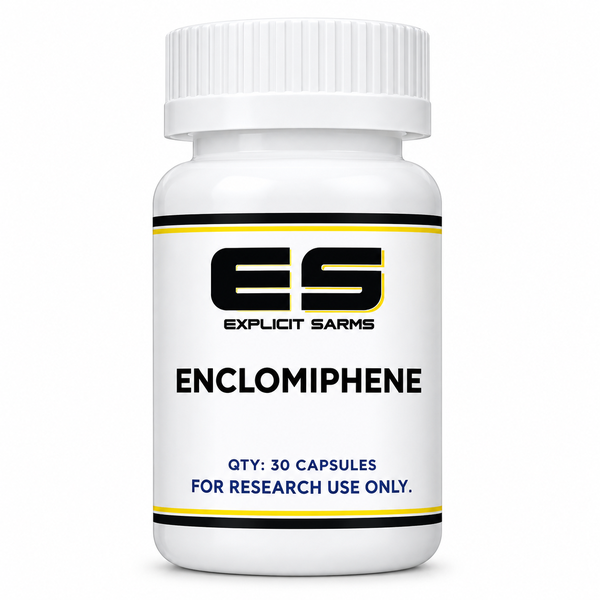
Understanding receptor activity is an important part of modern molecular biology and pharmacological research. Scientists investigate how different compounds interact with specific receptors, influence cellular signaling, and produce measurable biological responses. One area of interest is the selective androgen receptor concept, which relates to how certain compounds interact with androgen receptors and how those interactions may differ across tissues.
At Explicit SARMs, understanding the scientific principles behind research compounds helps readers explore the mechanisms, terminology, and limitations associated with this field. Selective androgen receptor modulators, commonly known as SARMs, are studied for their interactions with androgen receptors and their potential to produce different biological effects depending on the compound and experimental conditions.
What Is Selective Androgen Receptor Activity?
Selective androgen receptor activity refers to differences in how compounds interact with androgen receptors and influence biological responses in particular experimental systems. Androgen receptors are proteins that respond to hormones such as testosterone and dihydrotestosterone. These receptors help regulate gene expression and influence several physiological processes.
When an androgen or a related compound binds to an androgen receptor, it can affect the receptor’s structure and influence the recruitment of proteins involved in gene regulation. The resulting response depends on multiple factors, including the compound’s chemical properties, the type of cell, receptor abundance, and the availability of other cellular proteins.
In scientific research, selectivity describes differences in activity across tissues, biological pathways, or experimental conditions. It does not necessarily mean that a compound interacts with only one receptor or produces identical results in every biological system.
Why Androgen Receptors Matter
Androgen receptors belong to the nuclear receptor family, a group of proteins involved in regulating gene expression. After activation, androgen receptors can influence the transcription of specific genes and contribute to biological processes such as muscle development, reproductive function, and bone maintenance.
Researchers study these receptors to understand how different molecules influence cellular signaling. Their work may involve receptor-binding experiments, gene-expression analysis, cell-based assays, and other methods designed to characterize biological activity.
The findings can help scientists distinguish between receptor binding, receptor activation, and the broader biological effects observed in experimental models.
How Does Androgen Receptor Selectivity Work?
Androgen receptor selectivity involves examining whether a compound produces different responses across tissues, cell types, or biological pathways. Although compounds may interact with the same receptor, their effects can vary because receptor signaling is influenced by the surrounding cellular environment.
For example, two compounds may bind to an androgen receptor but produce different changes in gene expression. These differences may arise from their molecular structures, receptor conformations, interactions with regulatory proteins, or the experimental conditions used to evaluate them.
The Role of Molecular Structure
A compound’s chemical structure influences how it interacts with its biological target. Differences in molecular shape, chemical bonding, and other structural characteristics can affect receptor binding and the changes that follow receptor engagement.
Researchers use laboratory methods to investigate these interactions and determine whether structural differences correspond to measurable changes in activity.
However, structural observations alone cannot establish that a compound is tissue-selective or effective. Additional experimental evidence is needed to connect molecular interactions with biological outcomes.
Cellular Environment and Gene Expression
The same receptor may behave differently depending on the cell in which it operates. Cells can vary in receptor concentration, regulatory proteins, signaling pathways, and gene-expression patterns.
These differences can influence how a compound affects receptor activity. A response observed in one cell line may not occur to the same extent in another cell type or in a living organism.
For this reason, scientists examine multiple experimental systems whenever appropriate rather than assuming that one result represents every biological setting.
Understanding the SARMs Mechanism
The SARMs mechanism describes how selective androgen receptor modulators interact with androgen receptors and influence downstream biological processes. SARMs are investigated because certain compounds may produce different patterns of activity from conventional androgenic compounds under particular experimental conditions.
After a SARM interacts with an androgen receptor, the resulting molecular changes may influence receptor conformation, interactions with regulatory proteins, and the expression of target genes. These processes contribute to the biological responses measured in laboratory studies.
Importantly, the term selective androgen receptor modulator describes a research category, not a guarantee of tissue-specific activity.
Receptor Binding and Activation
Receptor binding occurs when a compound interacts with its molecular target. Binding measurements can help researchers estimate the strength of that interaction under defined experimental conditions.
Receptor activation is a separate consideration. A compound can bind to a receptor without producing the same functional response as another compound that binds to the same site.
Researchers therefore distinguish between binding affinity and functional activity. Binding affinity describes how strongly a compound interacts with a receptor, while functional assays investigate whether that interaction produces a measurable response.
Both types of evidence are useful, but neither alone provides a complete picture of a compound’s biological effects.
Co-Regulatory Proteins and Signaling
Androgen receptor activity is influenced by proteins that regulate transcription and other cellular processes. These proteins can affect whether receptor activation increases or decreases the expression of particular genes.
Different compounds may influence these interactions in different ways. This is one reason researchers investigate the relationship between molecular structure, receptor behavior, and gene-expression patterns when studying SARMs.
The resulting evidence helps build a more detailed understanding of receptor modulation without assuming that all compounds in the same category behave identically.
How Scientists Study Selective Androgen Receptor Activity
Researchers use several complementary methods to investigate receptor selectivity. Each method addresses a different question, and conclusions are strongest when multiple lines of evidence support the same interpretation.
| Research method | What it examines | Important limitation |
| Receptor-binding assays | How a compound interacts with an androgen receptor | Binding does not establish a complete biological response |
| Cell-based functional assays | Changes in receptor activity within experimental cells | Results may not represent whole-organism responses |
| Gene-expression analysis | Changes in the expression of selected genes | Changes in gene expression do not establish downstream effects |
| Tissue-based studies | Differences in activity across biological tissues | Tissue samples may not reproduce all living-system conditions |
| Animal studies | Biological responses in an organism | Findings may not translate directly to other systems |
| Published clinical literature | Outcomes reported in published studies | Results depend on study design, population, and duration |
Why Multiple Research Methods Matter
No single test can fully establish the selectivity or effectiveness of a compound. Binding assays can identify molecular interactions, while functional studies examine the responses associated with those interactions.
Animal studies may provide additional information about whole-organism effects, but differences between species can limit how far results generalize. Conclusions from any study remain dependent on study quality and the conditions investigated.
Researchers should evaluate the complete evidence rather than relying on a single laboratory result or an isolated claim about receptor selectivity.
Scientific Evidence and Research Limitations
Scientific evidence is essential when interpreting claims about selective androgen receptor activity. Early-stage laboratory findings can provide useful information about molecular mechanisms, but they do not automatically establish broader biological effects.
A compound may demonstrate a particular response in a controlled experiment while producing different results under other conditions. Differences in exposure, metabolism, receptor distribution, and biological regulation can influence the final outcome.
Laboratory Findings Versus Broader Conclusions
Laboratory experiments are designed to answer specific scientific questions. A cell-based study may show that a compound changes the activity of an androgen receptor pathway, but it cannot by itself establish broader biological effects.
Similarly, findings from animal studies should not be treated as definitive evidence beyond the model studied. Differences in physiology, metabolism, and experimental exposure can affect how results translate between species.
Researchers should distinguish preliminary findings from evidence supported by well-designed, reproduced studies.
Selectivity Is One Research Parameter
A major limitation in interpreting SARMs research is the assumption that selectivity necessarily reduces unwanted effects. Even if a compound demonstrates different activity across certain tissues or pathways, it may still influence other biological processes.
Published data vary in scope and quality from compound to compound.
Research labels and laboratory descriptions should therefore not be interpreted as proof that a compound is suitable for human consumption.
Gaps in Current Evidence
Scientific understanding develops as researchers collect and evaluate additional evidence. Some compounds have limited published data, while other findings may come mainly from preclinical studies.
Differences in study design can also make results difficult to compare. Researchers must consider sample size, experimental controls, measurement methods, study duration, and the reproducibility of findings.
A balanced interpretation acknowledges both what the available evidence demonstrates and what remains uncertain.
Comparing Key Concepts in SARMs Research
Understanding the terminology used in androgen receptor research can help readers interpret scientific publications more accurately.
| Concept | Meaning | Research significance |
| Androgen receptor binding | Interaction between a compound and the receptor | Helps characterize molecular affinity |
| Receptor activation | A functional response following receptor interaction | Helps determine whether binding produces a measurable effect |
| Androgen receptor selectivity | Differences in activity across tissues or biological pathways | Helps characterize the distribution of biological responses |
| Gene-expression changes | Alterations in the activity of selected genes | Helps investigate downstream signaling |
| Pharmacokinetics | Absorption, distribution, metabolism and elimination as reported in published studies | Helps explain exposure and duration of activity |
| Toxicology literature | Published toxicological findings | Helps establish the limitations of available evidence |
These concepts are related, but they are not interchangeable. A compound’s receptor-binding profile cannot independently establish its selectivity, or pharmacokinetic behavior.
Readers exploring related topics can also review the Explicit SARMs educational content on androgen receptor modulators, SARMs research, and compound specifications to build a broader understanding of the terminology used in this research area.
What Researchers Should Consider When Evaluating SARMs Studies
Evaluating research quality requires more than reviewing the reported outcome. Scientists and readers should consider the methods used, the limitations identified by the authors, and whether independent evidence supports the conclusions.
Important considerations include:
-
Study design: Determine whether the research used biochemical assays, cell cultures, or animal models.
-
Experimental conditions: Examine the conditions under which receptor activity was measured.
-
Outcome measurements: Identify whether the study measured receptor binding, gene expression, physiological changes, or other measured endpoints.
-
Reproducibility: Consider whether independent studies have reported similar findings.
-
Toxicology data: Review whether toxicological findings were reported.
-
Research limitations: Check whether the authors clearly distinguish established findings from hypotheses.
These considerations are particularly important when evaluating claims that a compound has a specific advantage because of its receptor selectivity.
A reliable scientific interpretation should reflect the strength of the available evidence rather than extending conclusions beyond what the research supports.
The Role of Responsible Research at Explicit SARMs
Understanding selective androgen receptor activity requires careful attention to molecular mechanisms, scientific methodology, and the limitations of current evidence. At Explicit SARMs, research-related information can help readers become familiar with compound terminology and the scientific questions surrounding androgen receptor modulation.
When evaluating information about research compounds, readers should prioritize clear product identification, appropriate documentation, and transparent descriptions of the available evidence. Product descriptions should not be treated as substitutes for independent scientific validation.
All compounds sold by Explicit SARMs are for laboratory research use only.
A responsible approach focuses on understanding what a study actually demonstrates, identifying remaining uncertainties, and avoiding unsupported conclusions.
Conclusion
Selective androgen receptor activity is an important concept in the study of receptor pharmacology and molecular signaling. It helps researchers investigate how compounds interact with androgen receptors, influence gene expression, and produce different responses across experimental systems.
However, receptor binding, functional activity, and tissue selectivity represent different aspects of scientific evaluation. Reliable conclusions require multiple research methods, reproducible findings, and careful consideration of study limitations.
For readers exploring SARMs and related research compounds, understanding these distinctions provides a stronger foundation for evaluating scientific information. Explicit SARMs encourages an evidence-focused approach that prioritizes clear terminology, transparent documentation, and responsible interpretation of research findings.
For further information about research compounds and relevant product documentation, Contact Us at Explicit SARMs. Our team can help direct your inquiry toward the appropriate available information.
Frequently Asked Questions
What does selective androgen receptor mean in scientific research?
The term relates to how compounds interact with androgen receptors and produce different biological responses. Researchers investigate these differences across tissues, cell types, and signaling pathways to understand receptor activity.
How does androgen receptor selectivity work?
Androgen receptor selectivity depends on factors such as compound structure, receptor interactions, cellular proteins, and gene-expression patterns. Laboratory and other experimental studies help researchers investigate these differences.
What is the SARMs mechanism?
The SARMs mechanism involves interactions between selective androgen receptor modulators and androgen receptors. These interactions may influence receptor signaling and gene expression, although effects vary by compound and experimental conditions.
Does selective androgen receptor activity mean a compound is fully characterized?
No. Selectivity describes one research parameter; full characterization requires multiple assay types and reproducible published data.
How do scientists evaluate SARMs research?
Scientists assess receptor-binding data, functional assays, gene-expression results, and other relevant studies. They also consider study design, reproducibility, limitations, and whether findings have been independently reproduced.
Ready to Explore SARMs for Your Research?
Browse our SARM capsules and liquids.
Shop All SARMs →For laboratory research use only. Not for human consumption.